

Why Do Cars Go To Auction? Discover How To Profit
 Nitesh Singh
December 5, 2023
Nitesh Singh
December 5, 2023





Car auctions are vibrant markets where automobiles are traded, attracting car enthusiasts seeking their ideal ride and sellers offloading inventory. But the question often arises: why do cars go to auction and why do cars go to auto auction?
In this article, we’ll journey through the complex world of auto auctions, illuminating the numerous factors contributing to vehicle arrival at the auction block.
Why Do Cars Go to Auction? Exploring the Automotive Auction Ecosystem
The automotive industry revolves around car auctions, an essential marketplace for buying and selling vehicles of all sizes and conditions. But what maintains the health and vitality of this ecosystem? The crucial roles that auctioneer, silent auction, and non-profit auction software play in providing the solution reveal themselves. With the help of these technological advancements, auctions are now more accessible and effective than ever before.
Get your Car Auction Website Instantly
Sell your car from your own website and earn Buyer’s Premium on it

Why Do Cars Go to Auction?
Understanding the factors that propel vehicles to the auction floor is crucial before we delve into the impact of auction software. Numerous factors, including off-lease vehicles, repossessions, retired fleet cars, and seized assets, contribute to the increase in automobiles entering the auction world.
Why Do Cars Go to Auction? Key Reasons Behind the Process
Vehicles trade hands in a busy marketplace called car auctions for various reasons. Understanding the multiple forces at play is crucial to comprehending why vehicles end up at auction. We will delve into these causes in more detail below, illuminating the various situations that result in car auctions.
Why Do Vehicles End Up at Car Auctions? Understanding the Key Factors
- Off-Lease Vehicles. Off-lease vehicles are one of the biggest sources of auction inventory. When a customer leases a car, the lease usually runs for two to four years. At the end of that term, the driver can either buy the vehicle or return it to the leasing company. Many returned lease cars are then sold through wholesale auto auctions. These vehicles are often attractive to dealers because they are usually newer, have predictable mileage, and come with a clearer service history than many private-sale cars. A new trend to watch is the rise of used electric vehicles entering the auction market. Many EVs leased during the 2023–2025 period are now starting to return, which may increase the number of used EVs available through auctions in 2026 and beyond.
- Repossessed Vehicles
Repossessed vehicles also make their way to car auctions. When a buyer finances a vehicle but falls behind on payments, the lender may take back the car and sell it to recover part of the unpaid loan balance. According to the Federal Trade Commission, in many states, a lender may repossess a vehicle once the borrower defaults, although the repossession must be done legally and without “breaching the peace.” This category is becoming more relevant because auto loan stress has increased. Experian reported that 30-day auto loan delinquencies rose to 2.00% in Q1 2026, compared with 1.95% in Q1 2025, while 60-day delinquencies also increased year over year. For buyers, repossessed vehicles can sometimes offer value, but they should be inspected carefully. Some owners may stop maintaining a car once they know they can no longer afford it. - Fleet Vehicles
Fleet vehicles come from rental companies, delivery businesses, government departments, ride-share operators, and corporate fleets. These organizations usually replace vehicles after a fixed time, mileage limit, or maintenance cycle. Fleet cars often go to auction because businesses need a quick and organized way to sell many vehicles at once. The advantage is that many fleet vehicles receive regular maintenance because companies track service schedules closely. The downside is that some may have higher mileage or heavy daily use. This is why buyers should look beyond the model year and check service records, tire condition, accident history, and overall wear before bidding. - Seized and Confiscated Vehicles
Some vehicles at auction come from government agencies. These may include retired government fleet vehicles, seized vehicles, or assets handled by public agencies. In the U.S., government vehicle auctions can include GSA fleet vehicle sales, GSA Auctions for excess government property, and U.S. Marshals Service seized asset auctions. These vehicles can vary widely. A retired government sedan may be well-maintained and ready to drive, while a seized vehicle may have limited service history. Buyers should always review the title status, inspection report, mileage, and auction terms before placing a bid. - Trade-Ins
Trade-ins are another major reason vehicles end up at auction. When someone buys a new or used car from a dealership, they often trade in their current vehicle. The dealer then decides whether to keep that vehicle for resale or send it to auction. A dealership may auction a trade-in if it does not match their inventory strategy. For example, a luxury dealer may send an older economy car to auction, while a used-car dealer may auction a vehicle that needs more repairs than they want to handle. Trade-in auctions create a wide mix of inventory, from budget cars and family SUVs to luxury vehicles and commercial vans. - Salvage and Insurance Vehicles. Some cars go to auction after being declared a total loss by an insurance company. This can happen after an accident, flood, theft recovery, fire damage, or another major claim. These vehicles are usually sold through salvage auctions and are commonly purchased by rebuilders, parts dealers, exporters, and experienced buyers. They may look affordable upfront, but repair costs, title branding, and resale limitations can make them risky for beginners. A clean-looking vehicle is not always a clean-title vehicle, so checking the title type is essential.
Get your Car Auction Website Instantly
Sell your car from your own website and earn Buyer’s Premium on it
Why Do Cars Go to Auction? The Role of Auctioneer Software and Its Impact
Efficiency and Reach:

Car Auction software streamlines the auction process, making it faster and more efficient.A dedicated car auction theme can attract more car enthusiasts and increase the reach of the auction, potentially leading to higher bids.
Customization:
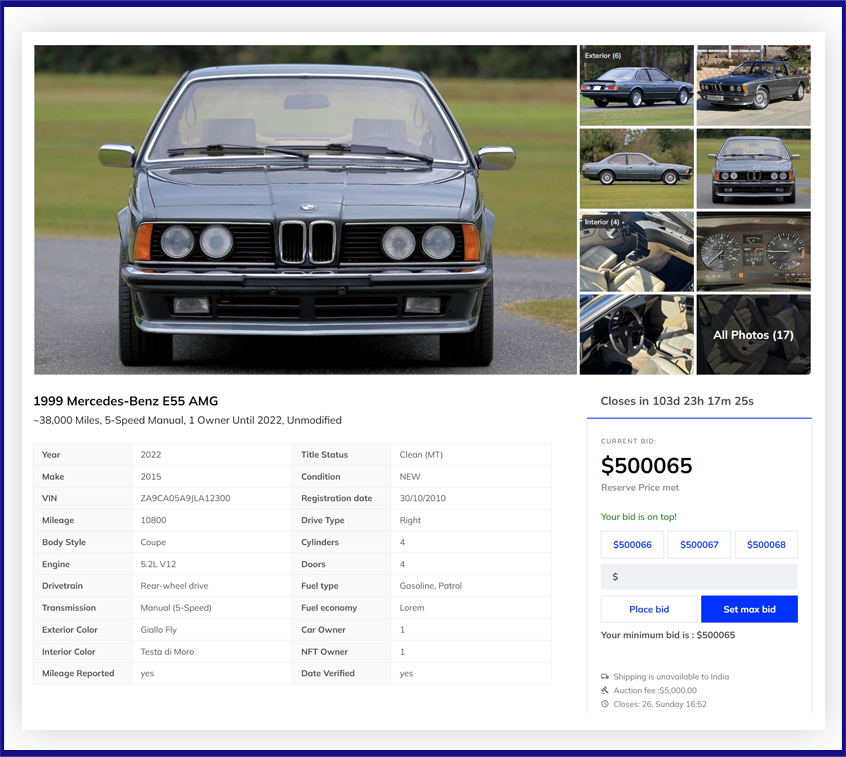
Having an ultimate car auction theme allows for branding and customization to align with the goals and image of the fundraising organization. Having seamless customization for the Car List Page, Images and Galleries, Car Auction Detail Page, Filtering Options, Advanced Search, and Vendor Seller Submission. Car Auction Software Images and Galleries
Real-time Bidding:
Car Auction software supports real-time bidding based on React and JSON technology, creating a dynamic and competitive atmosphere for car auctions, which can lead to better fundraising outcomes.
Bidder Engagement:
Car Auction software offers features like bidder emails, text messages, and WhatsApp notifications, and interactive bidding interfaces, making the auction more engaging for participants. Enhanced bidder engagement can result in increased competition and higher final bids, benefiting both sellers and fundraising efforts.
Bidding Strategies:
Car Auction software often supports proxy bidding and maximum bid settings, allowing bidders to set limits and strategies for their participation. Fundraising auctions can benefit from these features as they allow donors to express their support while ensuring they stay within their budget.
Anti-Sniping / Soft-Close: Give trusted and consistent bidders a fair chance to win auctions.
Silent Bidding: No increments, no bidding order. Users cannot see others’ bids.
Buy Now: Sell it instantly at a price of your own wish.
Ultimate Car Auction Software – proxy bid car auction
Payment Processing:
Payment Gateways: WooCommerce offers integration with various payment gateways that can handle secure transactions. Some popular payment gateways include PayPal, Stripe, Authorize.net, and more. Customers participating in the auction can make payments through these gateways.
Seamless Integration: When a customer wins an auction, the car auction software would communicate with WooCommerce to generate an invoice and prompt the winning bidder to make the payment using one of the available payment gateways. The integration ensures a smooth and seamless process.
Transparency and Trust:
Car Auction software provides transparency in the auction process, including bid history and vehicle information, which builds trust among bidders.
In fundraising auctions, transparency is essential to assure donors that their contributions are used for the intended charitable purposes.
Security and Compliance:
Car Auction software is designed to comply with security and privacy regulations, ensuring the safety of bidder data and financial information.
Compliance is especially crucial in fundraising auctions, where donor trust is paramount.
Cost Savings:
Car Auction software reduces the need for manual processes, paperwork, and physical infrastructure, resulting in cost savings for both car auctions and fundraising events.
Special Offer – Limited Time Only!
Rev Up Your Savings: Get 10% off Essential Ultimate Auction Software!
Fill the form and receive directly to your mailbox a discount code.
"*" indicates required fields
How Auctioneer Software Streamlines the Auction Process
The auction process is streamlined in several ways by auctioneer software:
Efficiency:
The software now automates many time-consuming manual tasks, like managing bid sheets, adding up bids, and creating invoices. Since auctions move more quickly due to this efficiency, auctioneers and bidders profit.
Real-Time Updates:
The real-time bidding activity is updated by auctioneer software. This openness promotes trust in the process by ensuring that participants are knowledgeable about the status of the auction at all times.
Wider Reach:
A global audience can now participate in auctions thanks to online bidding options provided by auctioneer software. Due to increased competition, sellers frequently receive higher prices due to the larger pool of prospective buyers.
Catalog Organization:
The software makes it simple to arrange and display auction items. Thanks to its user-friendly interface, participants can easily navigate the auction and find items of interest.
Benefits for Sellers and Buyers

Benefits for Sellers:
- Higher costs:
The ability of auctioneer software to foster competition frequently leads to higher final sale prices for sellers. Due to the competition among bidders, the item’s price increases. - Speedy Transactions:
A hallmark of auctions is their effectiveness. Sellers can quickly convert their assets into cash without the lag time frequently involved with other selling techniques. - Market Exposure:
With the help of auctioneer software, online auctions give sellers access to a larger market. This exposure makes finding the ideal buyer willing to pay more for their item more likely. - Market Exposure:
Auctioneer software guarantees that goods are sold for their fair market value. Fairness is ensured because the final sale price is based on what buyers pay.
Benefits for Buyers:
- Diverse Inventory:
The variety of items offered at auctions appeals to buyers with various interests and financial constraints. Everybody can find something at an auction, whether looking for a specific item or enjoying the adventure of discovery. - Competitive Prices:
When purchasing items at auctions, buyers can do so in a competitive environment and for competitive prices. Excellent deals can be found in bidding wars. - Transparency:
The auctioneer software’s real-time updates and bid tracking make the bidding process transparent. The integrity of the auction can be trusted by buyers, who can make well-informed decisions. - Convenience:
Buyers can participate in online auctions without leaving their homes thanks to auctioneer software. This convenience allows a larger audience to join because it eliminates the need to go to live auctions.
Summing Up,
The impact of auctioneer software is transformative as cars are traded in various ways at car auctions, which are dynamic marketplaces. Software for silent auctions is a crucial component of fundraising events that greatly helps nonprofit organizations. You can learn a lot from this guide if you are planning to build your dream car website.
So, why do cars go to auction? As a result of these technological advancements, auctions are now more accessible, effective, and profitable for both sellers and buyers. The future of auctions looks even more promising as technology develops, ensuring that these thriving markets remain a cornerstone of various industries.
Get your Car Auction Website Instantly
Sell your car from your own website and earn Buyer’s Premium on it
Frequently Asked Questions
Get your own Auction Today!

Choose Your Plan

Easy Setup

5 Star Support


Nitesh Singh is a software veteran and the Founder of Ultimate Auction. With 16+ years of experience in web development, he specializes in building high-performance auction tools for the WordPress community. Connect with Nitesh on LinkedIn or follow his latest auction strategy guides here.
More articles by Nitesh SinghRelated Post

How To Sell A Car At Auction: Expert Tips
How to Sell a Car at Auction: A Step-by-Step Guide Selling a car at auction can get you a better price than a dealer trade-in, but only if you pick the right platform for your car and go in knowing the fees, the paperwork, and how to set your reserve. Get those wrong, and an […]
Read More
Cars and Bids Review: Expert Insights You Need to Know
Explore an in-depth Cars and Bids review, revealing how it stands against online car auction competitors. Discover its unique features, fee structures, and user experiences in this Cars and Bids reviews. As someone with a keen interest and seasoned background in car auction sites, I recently explored Cars and Bids for its unique approach in […]
Read More
Maximizing Your Auction Success: Add Cars with Ultimate Auction Software
Are you looking to create car auction website quickly and effortlessly? With Ultimate Car Auction Software, the process is not only seamless but also highly efficient. In this guide, we’ll walk you through each step of the process, from entering your car details to monitoring your auction’s progress. Get ready to maximize your selling potential […]
Read More