

What Is a Livestock Auction? A Complete Guide
 Nitesh Singh
March 10, 2026
Nitesh Singh
March 10, 2026




If you raise cattle, hogs, sheep, or goats, chances are you’ve either attended or considered attending a livestock auction. These auctions remain one of the most common ways animals are bought and sold across the country. Each week, thousands of heads move through local sale barns, and national reports track price changes closely. Fed cattle, for example, have recently traded in the range of $1.70 to $2.00 per pound, while feeder cattle prices can fluctuate even more depending on weight and demand.
For new farmers, auctions can feel fast and confusing. The auctioneer’s chant moves quickly, buyers signal bids with subtle nods, and prices shift from week to week. But once you understand how the system works, it becomes much easier to follow. This guide breaks down what a livestock auction is, how it operates, how prices are reported, and how you can sell animals successfully.
What Is a Livestock Auction?
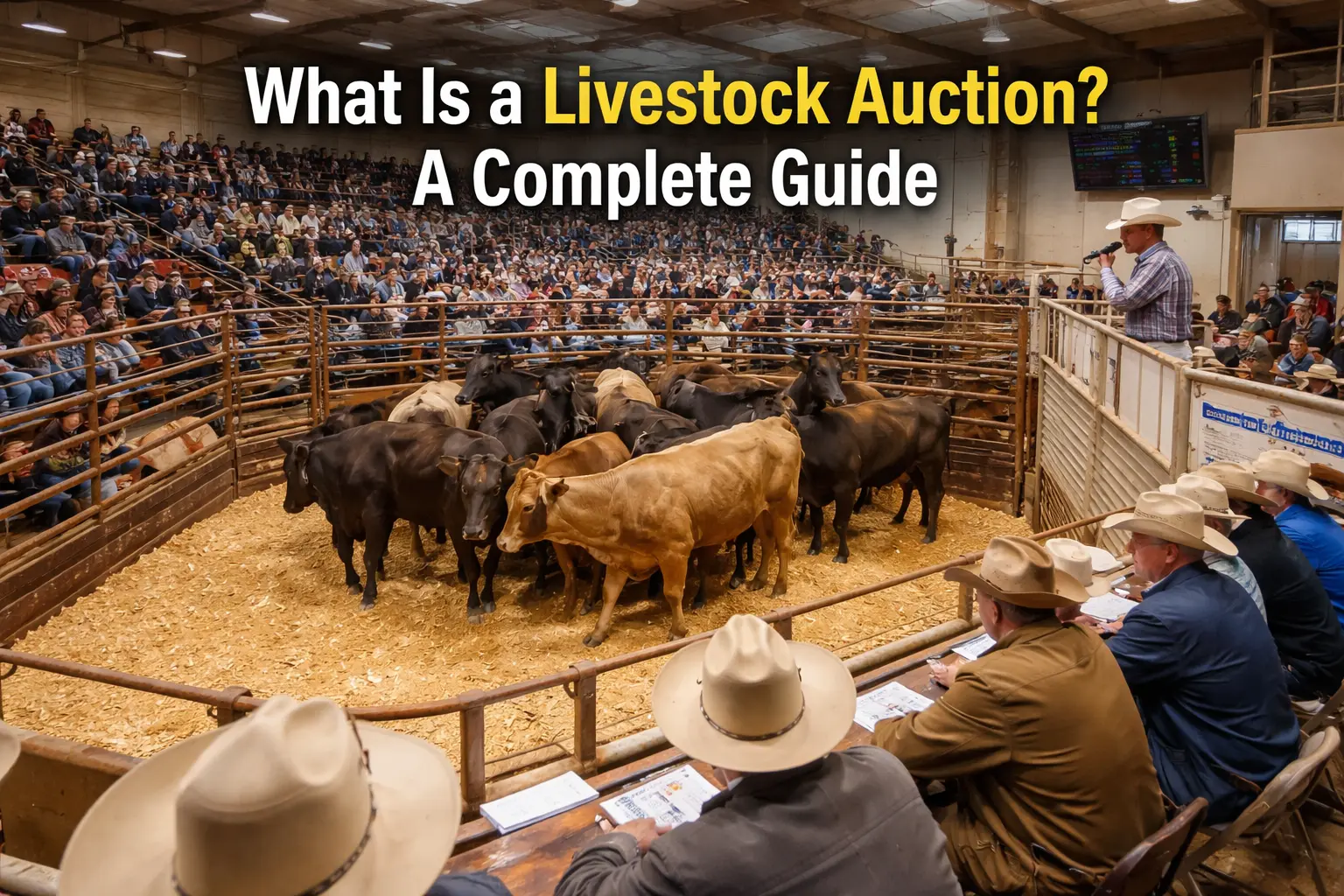
A livestock auction is a public sale where farm animals are sold to the highest bidder. These events typically take place at auction barns or stockyards that operate on a weekly schedule. Animals are grouped into lots based on type, weight, sex, and quality before entering the sale ring. Buyers then bid against one another until the highest offer wins.
Unlike private treaty sales, where price negotiations happen between two parties, auctions rely on open competition. That competition helps determine fair market value based on supply and demand at that moment. If there are fewer calves available and many buyers present, prices tend to rise. If supply is heavy and buyer turnout is lower, prices may soften.
Auctions also serve as price discovery centers. The results from these sales are compiled into market reports that producers and feedlots use to gauge trends. This makes livestock auctions an important part of the agricultural economy, not just a local event.
How Do Livestock Auctions Work?
The process starts before sale day. Sellers bring animals to the auction yard, often a day or two in advance. Staff members weigh the livestock, inspect them for health and identification tags, and sort them into lots. Each lot receives a number that corresponds to a catalog or sale order.
On sale day, buyers gather around the ring. The auctioneer stands at the front and calls out prices in a rhythmic chant. A ringman assists by spotting bids from buyers and relaying them to the auctioneer. Bids increase in small increments, often a few cents per pound for feeder cattle. The auction continues until no higher bid is offered, and the animal is declared sold.
After the sale, the auction company handles payment processing. Buyers settle their accounts, and sellers receive payment minus commission and yardage fees. Commission rates commonly range between 2% and 5% of the total sale value, along with per-head charges for handling.
For example, recent USDA Agricultural Marketing Service (AMS) reports show that feeder steers weighing 500–600 pounds have sold at auction for roughly $480 to $542 per head, depending on quality and buyer demand (USDA AMS Feeder Cattle Summary Reports). These per-head figures reflect strong interest in mid-weight cattle when feedlot margins are favorable. Auction prices often move in small increments during bidding, sometimes just a few cents per pound, but those changes can add up quickly. Watching these reported ranges helps sellers understand whether their cattle are bringing market-level prices.
Prices at these auctions are influenced by many outside factors. Feed costs, corn futures, weather conditions, export demand, and beef or pork wholesale values all play a role. Weekly data released by the USDA provides benchmarks that buyers use to guide their bidding decisions.
Types of Livestock Commonly Sold
Most livestock auctions handle several categories of animals. Feeder cattle are among the most common. These are young cattle sold to feedlots where they will be finished for beef production. Feeder cattle prices are usually quoted per pound and vary by weight class. For instance, 500–600 pound steers may bring $2.10 to $2.50 per pound depending on market conditions.
Fed cattle, also called finished cattle, are ready for slaughter and often priced per hundredweight (cwt). Hogs are another major category, with prices influenced by pork cutout values and processing capacity. Sheep and goats are also sold at many regional auctions, with demand often rising around certain holidays.
Each species has its own grading standards and market patterns. Understanding the category your animals fall into helps you interpret auction results more accurately.
How to Become a Livestock Auctioneer
If you are interested in the fast-paced environment of livestock sales, becoming an auctioneer can be a rewarding career path. The first step is education. Many aspiring auctioneers attend auction school, where they learn bid calling, auction law, and basic accounting. Tuition for these programs typically ranges from $1,000 to $3,000 depending on the school and program length.
After training, licensing requirements vary by state. Some states require a written exam, bonding, and registration before you can conduct sales. Working as an apprentice at a sale barn is common, as it allows you to gain experience under supervision.
Beyond the chant itself, a livestock auctioneer must understand animal grading, market reports, and buyer behavior. Income varies widely based on volume and commission structure. Some auctioneers earn a percentage of total sales, while others work on a salary plus commission. Experienced professionals handling large weekly volumes may earn between $40,000 and $100,000 per year.
Strong communication skills, quick thinking, and the ability to read a crowd are essential traits in this field.
Special Offer – Limited Time Only!
Rev Up Your Savings: Get 10% off Essential Ultimate Auction Software!
Fill the form and receive directly to your mailbox a discount code.
"*" indicates required fields
How to Read a Livestock Auction Market Report
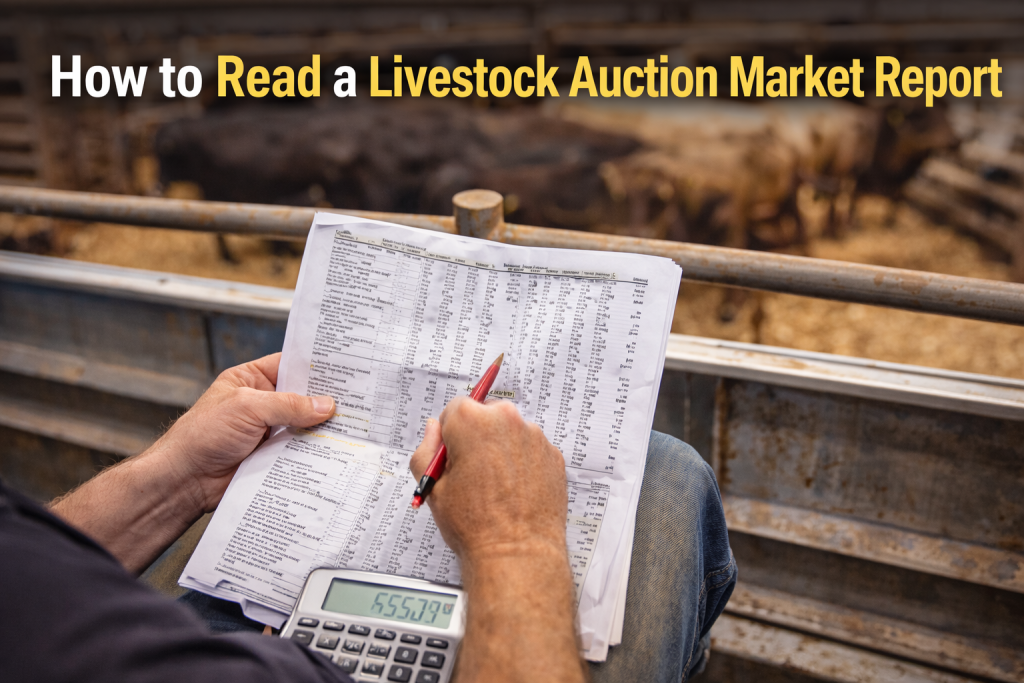
Market reports may look technical at first glance, but they follow a consistent format. A typical report lists the number of head sold, weight ranges, price ranges, and average prices. For example, a report might state that 700-pound steers sold from $1.85 to $2.05 per pound, with an average price of $1.95.
These numbers tell you several things. The price range shows the lowest and highest bids received, while the average provides a midpoint reference. If your cattle are above average in health and quality, they may bring prices near the top of the range.
USDA summaries often break data down by region and weight class. Reviewing these weekly reports helps you track whether prices are trending upward or downward. Over time, patterns emerge that can guide your selling decisions.
How to Read Livestock Auction Prices
Livestock prices are usually quoted either per pound or per hundredweight (cwt). A hundredweight equals 100 pounds. If a 600-pound steer sells at $2.20 per pound, the total sale price would be $1,320. If fed cattle are quoted at $185 per cwt and weigh 1,300 pounds, the gross value would be about $2,405.
National price benchmarks provide useful context when reviewing local auction results. According to recent USDA AMS Direct Cattle Reports, live slaughter steers have traded between approximately $215 and $226 per hundredweight (cwt). If a finished steer weighs 1,300 pounds at $220 per cwt, that equals a gross value of about $2,860 before commission and yardage fees. Comparing your local sale prices to these national ranges helps determine whether your market is trading above or below broader averages.
Weight class matters significantly. Lighter feeder calves may bring higher per-pound prices but lower total revenue due to lower weight. Heavier animals often sell at slightly lower per-pound prices but yield more total dollars.
Seasonal factors also influence pricing. Spring grass turnout often strengthens calf prices because buyers anticipate good grazing conditions. In contrast, fall can see larger volumes of calves entering the market, which may pressure prices downward. Watching these seasonal trends can help you choose the right selling window.
Special Offer – Limited Time Only!
Rev Up Your Savings: Get 10% off Essential Ultimate Auction Software!
Fill the form and receive directly to your mailbox a discount code.
"*" indicates required fields
How to Sell Livestock at Auction
Preparation plays a major role in auction success. Animals should be healthy, clean, and grouped in uniform lots. Buyers often pay more for cattle that are similar in size and weight because it simplifies feeding and management.
Proper documentation is also important. Health records, vaccination history, and ownership paperwork should be ready before sale day. Some buyers look for preconditioned calves with verified vaccination programs, which can bring higher bids.
Timing matters as well. Reviewing weekly market reports allows you to compare current prices with recent averages. If the market shows steady gains, holding for another week might increase returns. However, feed costs and weight gain must be considered when deciding whether to wait.
After the sale, review your settlement sheet carefully. It will list the gross sale price, commission, yardage fees, and any other deductions. Understanding these costs helps you calculate your net return accurately.
Start your own livestock auction platform with ease
Launch your own livestock auction platform quickly and easily, giving farmers and buyers a seamless place to trade animals online.

Expanding Sales with Online Auction Software
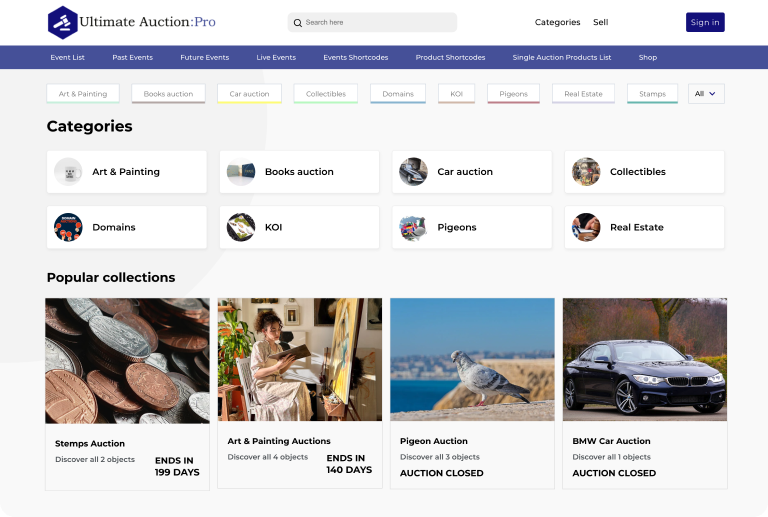
Livestock auctions are no longer limited to a physical sale barn. With the right online auction software, auction companies and livestock sellers can host digital bidding events that attract buyers from multiple regions at the same time. This helps increase bidder participation, which can support stronger final sale prices for cattle, hogs, sheep, goats, and breeding stock.
If you are planning to launch or upgrade your digital auction presence, a platform like GetUltimateAuction allows you to build a complete livestock auction marketplace. It works for both timed auctions and live webcast sales, giving operators flexibility depending on how they prefer to conduct events.
Here are key features particularly useful for livestock auctions:
- Lot-Based Listing Management – Create detailed listings for each livestock lot with weight, breed, age, health notes, and photos or videos. This makes it easier for buyers to evaluate animals before bidding.
- Timed and Live Auction Modes – Run scheduled timed auctions that close automatically or conduct live online bidding that mirrors a physical sale ring.
- Proxy (Auto) Bidding System – Buyers can enter their maximum bid in advance, and the system automatically increases their bid in set increments until their limit is reached.
- Buyer Registration & Approval Controls – Screen and approve bidders before they participate, which is helpful when selling high-value livestock or breeding stock.
- Automated Buyer’s Premium & Commission Settings – Configure commission rates, seller fees, and buyer premiums that calculate instantly at checkout.
- Secure Online Payment Integration – Accept multiple payment methods and process transactions safely, reducing delays after the auction closes.
- Real-Time Notifications & Reporting – Send automatic email or SMS alerts for outbids, winning bids, and auction closings, while generating downloadable sale reports for record keeping.
Using auction marketplace software like this allows livestock auction operators to serve both traditional buyers and remote participants without changing the core auction model. It brings structure, automation, and wider exposure to livestock sales while keeping pricing transparent and organized.
Launch your own livestock auction platform in minutes.
Easily launch your own livestock auction platform and connect buyers and sellers in one powerful marketplace.
Frequently Asked Questions
Related Post

Seize the Deal: Insider Secrets to Salvage Aircraft & Car Auctions
Salvage auctions are growing fast—and not just for bargain hunters. Investors, repair shops, and resellers are recognising the immense margins in this space. Whether it’s a car, truck, or even an aircraft salvage auction, these events offer opportunities to buy high-value assets at deep discounts. When a vehicle is written off by insurance or retired […]
Read More
Silent Auctions for Art Galleries: Proven Tips to Stand Out
You’ve probably been to one of those art events where people mingle with a drink in one hand and a bidding pen in the other. Quietly scribbling down numbers, glancing over their shoulder while pretending they’re not watching the same painting. Yep, that’s a silent auction. And when done right? It can bring in solid […]
Read More
How to Liquidate Inventory Through Online Auctions
Do you know what happens to extra stock that businesses can’t sell? Understanding how to liquidate inventory is crucial in such cases. Liquidation is the best way to sell out products and recoup costs. One of the fastest ways to liquidate inventory is through online auctions. Liquidity services auction platforms help sellers find buyers quickly. […]
Read More