

Build an Auction Website with WordPress: A Quick Guide
 Nitesh
September 24, 2024



- Why use WordPress for an auction website?
- What should you decide before you start?
- What hosting does an auction site need?
- How do you get hosting, a domain, and WordPress running?
- How do you set up the auction plugin or theme?
- How do you test your auction before you launch?
- How do you design your auction site?
- What should you do next?
- Setting Up WordPress: How to Build an Auction Website with WordPress
- How to Build an Auction Website with WordPress
- Turn Your Vision into Reality and Build a Successful Auction Site with the Ultimate Auction Theme!
- Conclusion: Mastering How to Build an Auction Website with WordPress
To build an auction website with WordPress, you need a domain, hosting, WordPress itself, an auction plugin or theme, and a payment gateway. Then you add your items, set the bidding rules (starting bid, increment, end time), and test the whole flow before you launch. This guide takes you through each step in order, and it’s written for sellers, auctioneers, and charities who want their own auction site without hiring a developer. [PLACEHOLDER: one line of experience, e.g. what customers have launched with Ultimate Auction and how long it took.]
Direct answer block (bold or boxed, right under the intro):
You build an auction website with WordPress by installing WordPress on your own hosting, adding an auction plugin or theme, connecting a payment gateway, and listing items with a starting bid and an end time. The steps are the same whether you sell collectibles, cars, or charity items. What changes from site to site is the auction type, the fees, and how winners pay.
Why use WordPress for an auction website?
Because you can build and run it without writing code. WordPress has themes and plugins that add bidding, countdown timers, and payments, a large community that answers questions, and regular updates from active developers.
There’s a trade-off. You look after the hosting, updates, and backups yourself, and the quality of auction plugins varies a lot. Before you buy one, check when it was last updated and how its support works. If you’d rather not maintain a WordPress site, standalone auction software is the other route. Ultimate Auction offers a WordPress auction plugin and online auction software. [CONFIRM the product names and how they differ, then use one name everywhere in the post.]
What should you decide before you start?
Five things: who will buy, what you’ll sell, what kind of auction you’ll run, what you’ll charge, and how winners pay and collect.
Who your buyers are. Collectors, bargain hunters, car fans, and charity donors each want different things. This shapes your design, your categories, and how you promote the site.
What you’ll sell. A narrow focus, such as vintage cars, antique furniture, or handmade goods, is easier to find and easier to trust than a site that sells everything.
What kind of auction. Timed online auctions, silent auctions for a charity event, or something else. If you want bidders to set a maximum and let the site bid for them, see what a proxy bid is.
Your fees. Decide whether you’ll charge a buyer’s premium, a seller commission, or listing fees, and whether items get a reserve. See what a reserve means in an auction.
Payment and delivery. When buyers must pay, how they pay, and whether they collect the item or you ship it.
Write these down first. They decide which plugin you need and what you set up later. [PLACEHOLDER: add one real example, e.g. a customer’s choices for auction type, fees, and delivery.]
What hosting does an auction site need?
A host that runs current WordPress, serves your site over HTTPS, and copes with a burst of visitors when an auction is about to close. Bids tend to cluster in the last few minutes, so a plan that’s fine on a quiet day can struggle at closing time. [PLACEHOLDER: add a real observation or a customer example if you have one.]
Check these before you buy:
- Software versions. The host must support the PHP, WordPress, and WooCommerce versions your auction plugin or theme needs.
[CONFIRM the minimum versions Ultimate Auction requires and list them here.] - HTTPS (SSL). Bidders enter personal and payment details, so the whole site should load over HTTPS. Most hosts include a free certificate.
- Scheduled tasks (cron). Auctions close and send emails on a schedule, so your host has to allow cron jobs.
[CONFIRM how Ultimate Auction uses cron.] - Backups. Look for automatic backups you can restore. Daily is better than weekly for a live auction site.
- Room to grow. Choose a plan you can upgrade without moving the site.
- Renewal price. The low advertised price is usually an introductory rate on a multi-year term, and the renewal price is higher. Check both numbers.
A shared plan from a mainstream host, such as Bluehost or SiteGround, is enough for a small site. [If the Bluehost link is an affiliate link, add a disclosure line here.]
How do you get hosting, a domain, and WordPress running?
Pick a host and a plan. Compare the renewal price, not just the first-year price.
Choose a domain name. Keep it short, easy to spell, and related to what you sell. Skip hyphens and numbers. Many hosts include a free domain for the first year.
Install WordPress. Most hosts have a one-click installer in their dashboard that sets WordPress up for you. Menu names differ by host, so follow your host’s own guide.
Turn on HTTPS. Switch on the free SSL certificate and check that the padlock shows in your browser’s address bar.
Check the basics. Log in to your WordPress dashboard, run any pending updates, and set the site title and time zone. Set the time zone now, because auction end times depend on it. [CONFIRM this applies to Ultimate Auction.]
Next you add your auction plugin or theme, which the following sections cover.
[PLACEHOLDER: replace the server stock photo with a screenshot of your own WordPress dashboard on a new site. Alt text: “WordPress dashboard on a new auction site before the auction plugin is installed”.]
How do you set up the auction plugin or theme?
Install your auction product, add the plugins it needs, set the basics and payments, then create your first auction. Here’s the order that works.
1. Install your auction product
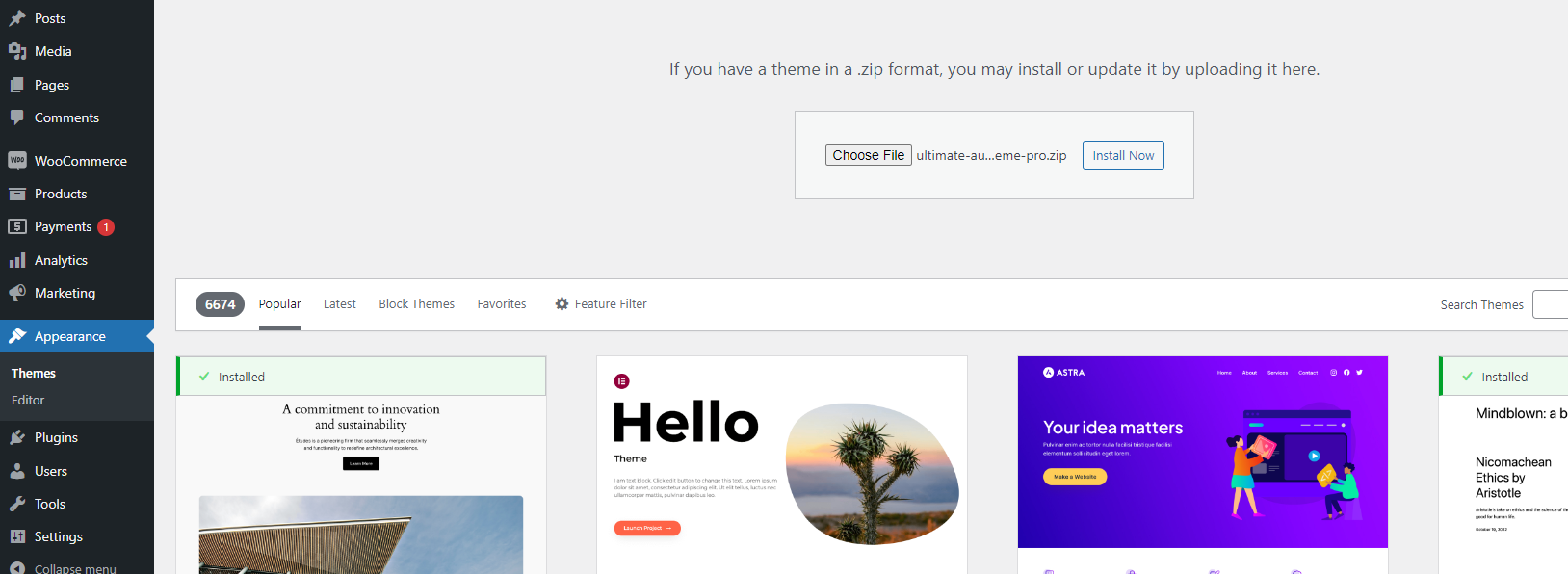
Download the zip file from your account. A paid product isn’t in the WordPress directory, so upload it instead of searching for it. In your dashboard, go to Appearance > Themes > Add New > Upload Theme, choose the zip, then click Install Now and Activate. [CONFIRM: is Ultimate Auction installed as a theme or a plugin? If a plugin, use Plugins > Add New > Upload Plugin.]
2. Add the plugins it needs
Ultimate Auction needs WooCommerce and Advanced Custom Fields to run. [CONFIRM the required plugin list for your current version.] Install and activate them from Plugins > Add New.
3. Import the demo content (optional)
The theme can offer to import sample pages and products. This gives you a finished layout to edit instead of a blank site. Use it on a new site, so it doesn’t clash with pages you already have. [CONFIRM that this is still offered.]
4. Set the basics
Open the theme options and set your currency, time zone, and default auction length. Check the time zone twice, because every auction end time depends on it.
5. Connect payments
Add your payment gateways, such as PayPal or Stripe, and switch them to test mode first. [CONFIRM the gateways Ultimate Auction supports.] You’ll test them properly in the next section.
6. Create your categories
Add the categories bidders will browse, such as Art, Cars, or Collectibles. Keep the list short. Five clear categories help buyers more than twenty overlapping ones.
7. Add your first auction
Create a new auction and fill in:
- A clear title, and a description with condition, size, and what’s included
- Good photos
- Starting bid and bid increment
- Reserve price, if you want one
- Start and end time
To let bidders set a maximum and have the site bid for them, switch on Enable Proxy Bidding. Our guide to what a proxy bid is explains how that works for your bidders. [CONFIRM the exact menu path in your admin: the two old sections said "Product/Lot > Add New" and "Add Auction". Click through it on a fresh install and use what you see.]
8. Show your auctions on a page
Create a new page and paste the shortcode [uwa_live_auctions] into it. Publish the page, and it lists every live auction. [CONFIRM the shortcode is still current.]
9. Set up email notifications
In the theme settings, turn on emails for new bids, being outbid, auctions ending soon, winning bids, and payments received. Bidders rely on these, so don’t skip them.
[PLACEHOLDER: add three screenshots from your own demo: the theme upload screen, the add-auction form with the proxy bidding option, and a published page with the shortcode. Write alt text that describes each one, e.g. "Add auction form with starting bid, bid increment and reserve price fields".]
How do you test your auction before you launch?
Run a full test auction from a second account. A test that only checks the admin side misses the problems bidders will hit.
- Create a second account and bid on a test item from it, as a normal bidder would.
- Place a proxy bid from one account and a manual bid from the other, and check the price moves the way you expect.
- Run a test payment through each gateway you’ve connected, in test mode.
- Check the emails. Confirm that bid, outbid, and winning emails arrive, and look in the spam folder too.
- Let a short auction end. Set a test lot to close in ten minutes, and watch it end on time and send the winner’s email. If it doesn’t close, check your scheduled tasks (cron) with your host.
- Open the site on your phone. Bidders will use one.
When it all works, delete the test items and switch your payment gateways to live mode.
How do you design your auction site?
Set up your header, homepage, footer, and a few key pages. The theme options panel covers most of it, and you don’t need to touch code. [CONFIRM: that these options are in the Ultimate Auction theme options panel.]
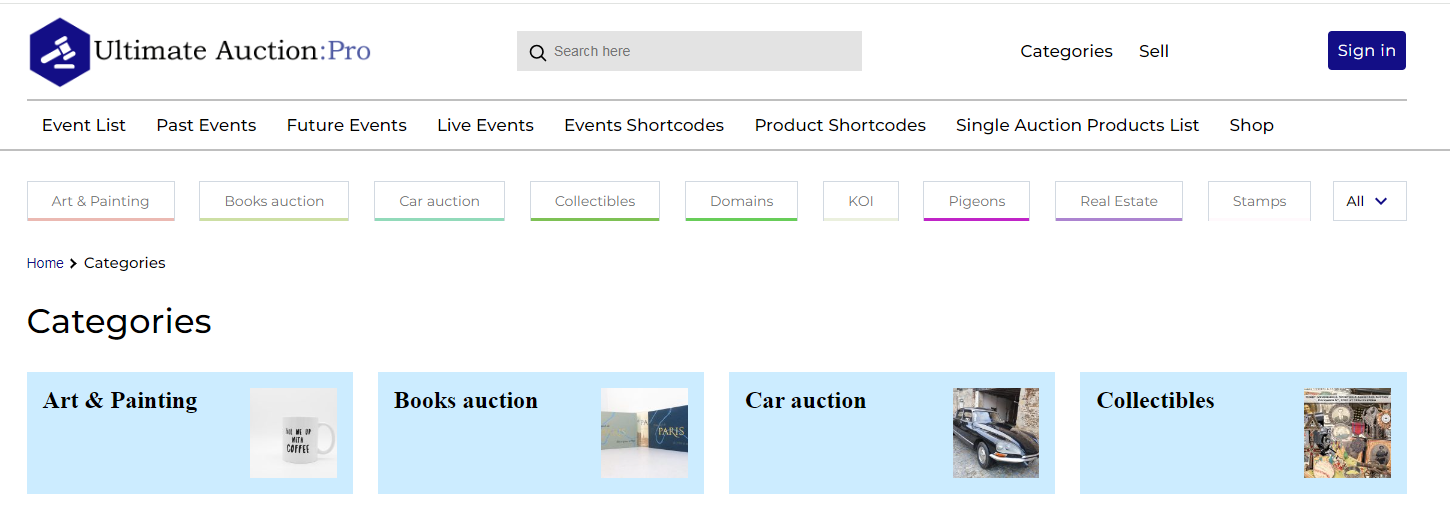
- Header. Add your logo, a search box, and login and register buttons, then set up your main menu. Bidders need to find the search box and the login quickly.
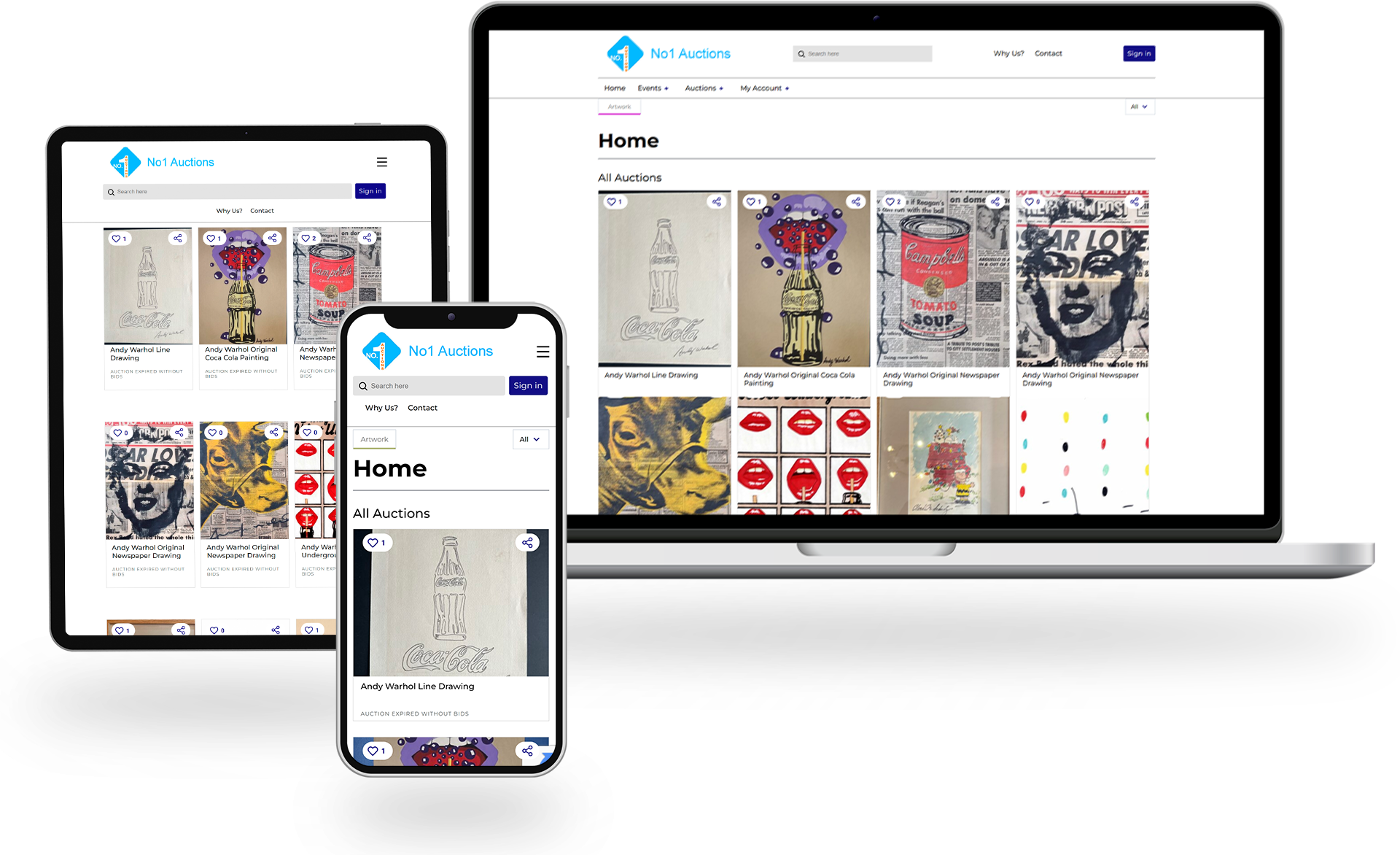
- Homepage. Lead with live auctions and the categories you set up. A row of “ending soon” lots gives visitors a reason to bid today. If you imported the demo content earlier, edit it instead of starting from a blank page.
- Footer. Add columns for contact details, your auction rules, and social links, plus a copyright line.
- Other pages. Create pages for how bidding works, your fees and payment terms, and contact details. You can build them with shortcodes or drag-and-drop widgets.
Write your bidding rules on a page of their own and link to it from every listing. Cover how proxy bidding works, any buyer’s premium, and when winners must pay. Our guide to what a proxy bid is can help you explain it.
A speed warning. Auction pages show a live price and a countdown, so a caching plugin can show visitors an old price. Check your caching settings, and exclude auction pages from the cache if your auction product recommends it. [CONFIRM with your developer or the product docs.]
[PLACEHOLDER: keep your header, footer, and homepage screenshots, but write real alt text, e.g. "Auction homepage with live auctions, categories and a search box". Remove the "No1 Auctions" caption unless that's a real customer you have permission to name.]
What should you do next?
Before you build anything, write down your answers to five questions: who your buyers are, what you’ll sell, what kind of auction you’ll run, what you’ll charge, and how winners pay. They decide which plugin you need and how you set it up.
Then open the live demo and place a test bid, so you see what your bidders will see. When you’re ready to build, see the Ultimate Auction plans.

In order to create an auction website, you need to follow the below steps.
Key Considerations Before Starting
The very first step is to identify your target audience. Knowing who you are trying to reach will help in your website’s design and functionality. Are you targeting collectors of rare items, bargain hunters, or people interested in buying vintage cars? Understanding your audience helps in selecting the right features and marketing strategies.
Next step is to determine the types of items you will auction. Specializing in a niche can attract a specific audience. For example, you might focus on vintage cars, antique furniture, or handcrafted goods. A clear focus can make your site more attractive to users interested in those specific items.
Technical Requirements
Once you have a clear plan, it’s time to focus on the technical requirements. These include selecting a hosting provider, securing a domain name, and obtaining SSL certificates to ensure secure transactions.
Hosting Provider
Choosing a reliable hosting provider is essential for your auction site’s performance and reliability. BlueHost is a reliable and secure choice for hosting WordPress-based auction websites. Here’s a step-by-step guide on how to get started with BlueHost:
Step 1: Visit BlueHost’s Website
Go to BlueHost and navigate to their hosting plans. BlueHost offers various plans tailored to different needs. For most auction sites, the Basic or Plus WordPress Hosting plans are ideal.
Step 2: Select a Hosting Plan
Choose a plan that fits your needs. The Basic plan starts at $2.95 per month and includes:
- One website
- 10 GB SSD storage
- A free domain for the first year
- Free CDN
- Free SSL Certificate
The Plus plan, which allows for multiple sites and offers more storage and features, starts at $5.45 per month.
Step 3: Register Your Domain
Your domain name is your website’s address on the internet. It should be memorable and relevant to your auction site’s theme. During the sign-up process, you can choose a domain name that is short and relevant to your auction site. Try to keep it short, simple, and easy to spell. BlueHost offers a free domain for the first year with their hosting plans.
Step 4: Install WordPress
BlueHost provides a one-click WordPress installation. After purchasing your hosting plan, you can easily set up WordPress through the BlueHost dashboard. This simplifies the process and ensures your site is ready for customization and content.
Step 5: Secure Your Site with SSL
Security is paramount for any auction website. An SSL certificate encrypts the data exchanged between your site and its users, protecting sensitive information like payment details. BlueHost includes a free SSL certificate with their plans, which encrypts data and secures transactions. Activate the SSL certificate to display the padlock icon in the browser’s address bar, indicating that your site is secure.
Step 6: Customize Your WordPress Site
After installing WordPress, select a theme that fits auction websites, focusing on features like bidding and payment gateways. Next, install the necessary plugins that the auction theme requires.
Start Your Auction Site Now
Important Aspects: Creating a Website using Ultimate Auction software with Technical Needs and Selecting the Right Hosting Provider.

Setting Up WordPress: How to Build an Auction Website with WordPress

This step-by-step guide will help you set up WordPress for an auction website efficiently.
Step 1: Install WordPress

After purchasing your hosting plan and registering your domain, the next step is to install WordPress. BlueHost simplifies this process with a one-click WordPress installation feature. Here’s how to do it:
1. Log into your BlueHost account.
2. Navigate to the “My Sites” tab in the BlueHost dashboard.
3. Click “Create Site.”
4. Follow the on-screen instructions to set up WordPress, including choosing your site name and tagline.
Step 2: Select and Install a Theme
Once WordPress is installed, the next step is to choose a theme that suits an auction site. There are many themes available, both free and premium, that are specifically designed for auction websites.
GetUltimateAuction: This theme adds auction functionality to your WordPress site, allowing you to manage bids, set reserve prices, and more.
Here’s how to install a theme:
1. Go to the WordPress dashboard.
2. Navigate to “Appearance” and then “Themes.”
3. Click “Add New” and use the search bar to find a suitable auction theme.
4. Preview the theme to see how it looks.
5. Click “Install” and then “Activate” to apply the theme to your site.
Step 3: Install Essential Plugins
To turn your WordPress site into a fully functional auction website, you need to install required plugins related to your auction theme. You can also installed other third party plugins which enhance the functionality of auction website according to your requirement. Here is essential one:
- WooCommerce: For handling payments and product listings.
To install a plugin:
1. Go to the WordPress dashboard.
2. Navigate to “Plugins” and click “Add New.”
3. Use the search bar to find the plugins mentioned above.
4. Click “Install Now” and then “Activate” to add the plugin to your site.
Step 4: Configure Your Auction Settings
Once your theme and plugins are installed, you need to configure your auction settings. This includes setting up auction categories, defining bidding rules, and configuring payment gateways.
1. Go to the theme options for the auction theme you installed.
2. Set up auction categories to organize your items.
3. Define bidding rules such as minimum bids, bid increments, and auction duration.
4. Configure payment gateways like PayPal or Stripe to handle transactions securely.
Step 5: Add Auction Items
Now, you can start adding items to your auction site. Ensure that each item has a clear title, detailed description, and high-quality images.
1. Go to the auctions section in the WordPress dashboard.
2. Click Product/Lot -> Add New
3. Fill in the item details including title, description, starting bid, and upload images.
4. Publish the item to make it live on your site.
Step 6: Test Your Auction Website
Before launching your site, it’s essential to test all its functionalities. This includes placing bids, processing payments, and ensuring that notifications are working correctly.
1. Place test bids to see if the bidding system works.
2. Process test payments to ensure payment gateways are functioning.
3. Check email notifications to confirm users are receiving updates about their bids and transactions.
Now you have set up a WordPress auction website that is functional, secure, and user-friendly. This will help you create a successful platform for buying and selling items through auctions.
Launch Your Auction Site Immediately
Achieve it effortlessly with Ultimate Auction Software
How to Build an Auction Website with WordPress
Setting up auction functionalities on your WordPress site using the Ultimate Auction: Pro Software Theme is a straightforward process. This guide will walk you through the detailed steps to ensure your auction site is fully functional and ready for users.
Step 1: Install and Activate the Theme
1. Download the Theme: Visit the Ultimate Auction: Pro Software Theme page.
2. Upload to WordPress: In your WordPress dashboard, navigate to Themes > Add New, click on Upload Theme, and select the downloaded file.
3. Activate the Theme: Once uploaded, click on Activate Theme.
Step 2: Configure Basic Settings
1. Access Settings: Navigate to the Theme Options via the WordPress dashboard.
2. General Settings: Configure basic settings such as currency, timezone, and auction duration.
3. Payment Settings: Set up payment gateways like PayPal or Stripe to handle transactions securely.
Step 3: Add Auction Categories
1. Create Categories: Go to the Event Category section in the Auctions menu.
2. Add New Category: Enter the name and description for each category. This helps in organizing your auction items and making it easier for users to find specific types of auctions.
Step 4: Add Auction Items
1. Go to Add New Auction: In the Theme menu, click on Add Auction.
2. Enter Details: Fill in the details for your auction item, including the title, description, starting bid, bid increment, reserve price, and auction duration.
3. Upload Images: Add high-quality images of the item to attract more bidders.
4. Publish the Auction: Click on Publish after entering all the required details.
Step 5: Display Auctions on Your Site
1. Create an Auction Page: Go to Pages > Add New in your WordPress dashboard.
2. Insert Shortcode: Enter `[uwa_live_auctions]` into the content area to display all live auctions.
3. Publish the Page: Click Publish to make the auction listing page live on your site.
Step 6: Manage Auctions
1. View Active Auctions: Navigate to the Product/Lot menu in the theme to see all active auctions.
2. Edit or Delete Auctions: You can edit auction details or delete auctions as needed from this menu.
3. Configure Email Notifications: In the theme settings, set up email notifications for various auction events such as new bids, auction ending soon, winning bid confirmation, and payment received.
Special Offer – Limited Time Only!
Rev Up Your Savings: Get 10% off Essential Ultimate Auction Software!
Fill the form and receive directly to your mailbox a discount code.
"*" indicates required fields
Turn Your Vision into Reality and Build a Successful Auction Site with the Ultimate Auction Theme!
Are you ready to take your auction business to the next level? The Ultimate Auction Pro Software is your all-in-one solution for creating a thriving online auction platform. You can create a dynamic, engaging, and profitable auction website using it.
Install and Set Up Theme
- Review Theme Features : Explore demo sites, read documentation, and understand functionalities and customization options.
- Ensure Compatibility : Confirm the theme meets your requirements for auction types, payment integrations, design flexibility, and user interface.
- Purchase License : Choose the appropriate license (single site, multiple sites, or developer).
Follow the purchasing process on the official website to obtain the theme zip file. - Install Theme : Navigate to Appearance > Themes > Add New.
Upload the theme zip file and click “Install Now”.
Install and Configure Necessary Plugins
- Extend Functionality : Admin needs to installed the required plugins for theme. Install essential plugins such as WooCommerce and Advanced Custom Fields to fully enable the theme’s functionality.
- Import Demo : During the theme installation, the theme will prompt you to import demo content. Follow the instructions to load sample products, pages, and settings onto your site. Importing demo content can provide a fully designed layout to help you get started quickly.

Design Your Site’s Layout
-
- Custom Header : The theme provides options to customize the header, including setting up the site logo, search box, and login/register buttons, as well as configuring the main navigation menu to create a user-friendly and attractive header.
-
- Custom Footer : The theme offers customizable footer options, including column setup, a copyright bar, and social media icons. Admins can use the theme options panel to arrange content, add a copyright notice, and integrate social media icons for a functional and visually cohesive footer.

-
- Home Page Setup: Capture visitors’ attention with a polished and professional homepage design, establishing an ideal first impression for your auction platform.
- Other Pages : Set up additional pages by manually adding content, using shortcodes, or employing drag-and-drop widgets.
Secure Payment and Smooth Transactions
- Payment Integration : Set up secure payment gateways to handle transactions effortlessly.
- Prioritize Security : Apply comprehensive security measures to safeguard your site and its users.
Automate and Optimize
-
- Scheduled Tasks : Use cron jobs to automate regular tasks and keep your site running smoothly.
- SEO and Performance : Optimize your site for search engines and enhance loading speeds with our recommended plugins.
Launch Your Website
- Final Touches : Review your site, ensure all features work flawlessly, and make final adjustments.
- Go Live : Launch your site and start attracting visitors with targeted promotional strategies.
Conclusion: Mastering How to Build an Auction Website with WordPress

Setting up an auction website using WordPress is practical and worth it. Starting with the selection of a reliable hosting provider like BlueHost will give a solid foundation. The installation of WordPress and using the Ultimate Auction Pro theme helps to streamline your work. Configuring settings, adding auction categories, listing items, and managing notifications are all straightforward processes for your site.
You can create a user-friendly auction website with Ultimate Auction Pro. This theme offers features like managing bids, setting reserve prices, handling payments, and sending notifications.
Now is the perfect time to start building your auction website with WordPress. If you need further assistance or have any questions, feel free to contact us. We are here to help you every step of the way. Additionally, consider signing up for our newsletter to stay updated on the latest tips, tutorials, and updates related to auction websites.
Frequently Asked Questions
Get your own Auction Today!

Choose Your Plan

Easy Setup

5 Star Support


