

Category: Auction Guides




- What is a Proxy Bid?
- Key Features of Proxy Bidding
- What Is a Proxy Bid? Enhancing Efficiency with Proxy Auction Software
- What Is a Proxy Bid? Top Strategies for Successful Auctions
- Ethical Considerations: Fostering Fairness and Transparency
- The Symbiotic Relationship: Proxy Bidding and WordPress Auction Software
What is a Proxy Bid? The idea of proxy bidding has emerged as a sophisticated and strategic approach, transforming the conventional auction experience in contemporary auction dynamics
Auction enthusiasts can navigate the competitive landscape more subtly and effectively with the help of cutting-edge auctioneer software and creative proxy bidding strategies.
This in-depth guide will explore what is a proxy bid, its advantages, and how advanced auction software helps raise auction strategies to new heights is.
Want to setup Auction Website
Ultimate Auction Software will let you do it in easy steps with Proxy Bidding.

What is a Proxy Bid?
Proxy bidding adds strategic depth to the auction process, enabling bidders to participate actively in auctions even if they cannot watch the bidding activity in real-time or attend the event in person.
Proxy bidding works on a more automated and deliberate mechanism than the conventional image of auction rooms with rapid-fire bidding directed by an auctioneer.
In a proxy bidding scenario, participants specify the highest bid amount they are willing to make for an item. This maximum offer is kept private and is only known to the bidder. The auctioneer software then acts as a middleman, making incremental bids on the bidder’s behalf up to their maximum bid.
As a result, bidders can participate in the process without constantly monitoring it, ensuring they stay competitive and stick to their predetermined budget.
Key Features of Proxy Bidding

Strategic Precision:
Participants can approach auctions with a well-thought-out strategy thanks to proxy bidding. By carefully evaluating an item’s value and basing their maximum bid on that value, bidders can avoid the impulse of impulsive bidding and encourage a more deliberate approach.
Time Efficiency:
Proxy bidding’s advantages in terms of time-saving shine through. A bidder can participate in several auctions without physically being there or constantly watching the proceedings. This feature is beneficial for busy people looking to maximize their auction participation.
Budget Control:
The ability of proxy bidding to keep bidders within their financial restrictions is one of its most notable benefits. Participants can confidently engage in bidding without worrying that their financial limits will be exceeded by setting a maximum bid in advance. Once you understand what is a proxy bid, it’s crucial to focus on budget.
Bid Anonymity:
Maintaining bidder anonymity through proxy bidding gives the procedure an additional layer of fairness. Proxy bidders can stick to their strategies without outside pressure, unlike traditional bidders who other people’s actions may sway.
Competitive Edge:
Proxy bidding gives the auction experience a competitive edge. The satisfaction of knowing they are participating in a strategic tug-of-war with other bidders while still having control over their bids is enjoyed by bidders. This encourages the lively and exciting atmosphere that distinguishes a successful auction.
Bid Automation:
Continuous manual bidding is not necessary with proxy bidding. The proxy bidding system automatically places bids on a bidder’s behalf up to that maximum amount once they have set their maximum bid. This ensures that bidders can still participate in the auction even if they cannot watch it actively.
Last-Minute Bidding:
Even if a bidder has yet to bid the entire time actively, proxy bidding enables them to participate until the end of the auction. This tactic avoids the “sniping” effect, in which buyers place last-minute bids to win an item.
Strategic Flexibility:
A bidder may change their maximum bid in response to evolving conditions or the auction’s progress. This adaptability allows participants to adjust their strategies and react to rival activities.
Risk Management:
By using a proxy, bidders can reduce their chances of losing an item because of slow internet or being unavailable during the auction. The system makes sure that bids are submitted continuously and consistently.
Data-Driven Insights:
Proxy bidding platforms frequently offer participant insights into historical auction data, bid patterns, and trends. With the help of these insights, bidders can choose wisely, hone their tactics, and raise their chances of success.
Multi-Platform Access:
Accessing auctioneer software on devices like smartphones, tablets, and computers is frequently possible. This adaptability improves convenience and accessibility, enabling bidders to participate in auctions anywhere.
Fair Pricing:
Proxy bidding frequently results in items sold at their actual market value because bidders don’t make impulsive or emotional bids; instead, they base their bids on how much they believe the thing is worth.
Bid Monitoring:
The auctioneer software allows participants to keep track of the status of their bids and the overall auction in real time. The ongoing observation keeps bidders informed and involved.
Enhanced Auction Experience:
Proxy bidding improves the overall auction experience for both bidders and organizers by reducing the need for in-person interaction. Stress levels are lower, strategic thinking is possible, and a more welcoming environment is produced.
Global Participation:
Proxy bidding allows participants worldwide to participate in the same auction event despite geographical barriers. The audience is broadened by this global reach, which also raises the possibility of competitive bidding.
What Is a Proxy Bid? Enhancing Efficiency with Proxy Auction Software
By integrating the idea of proxy bidding into a global auction platform through specialized auctioneer software, the dynamic digital age has completely changed how auctions are conducted.
The bidding process has been updated thanks to this seamless integration, improving its effectiveness, accessibility, and overall efficiency. An in-depth examination of how proxy auction software significantly enhances the proxy bidding strategy is provided below:
Automated Bidding Excellence:
Software for proxy auctions is built around the ability to execute automated bidding with unmatched accuracy. The software assumes control after a bidder sets their maximum bid and strategically places incremental bids on their behalf. This autonomous process guarantees that participants stay in the running until their predetermined budget threshold is reached and keeps them competitively engaged.
Real-time Updates for Strategic Advantage:
Effective online bidding depends on transparency and real-time interaction. Participants can receive instantaneous updates on the status of their bids thanks to proxy auction software.
This critical feature equips bidders with the knowledge to quickly modify their plans, make wise choices, and remain actively involved throughout the auction.
Tailored Bid Customization:
The ability to customize a bid is another example of how sophisticated modern auctioneer software is. Participants can adjust their maximum bids to reflect changing conditions as the auction progresses and dynamics change.
This adaptability guarantees that bidders stay quick and responsive, maximizing their chances of success in a market-driven competitive environment.
Fortified Security Measures:
Security is of the utmost importance when conducting business online. Protecting sensitive user data and financial transactions is a top priority for proxy auction software.
This software creates a reliable and secure online environment by implementing strict security protocols, boosting bidder confidence, and enabling smooth interactions.
Invaluable Insights through Data Analytics:
Software for auctioneers serves as both a facilitator and a tactical partner. This software provides bidders with priceless insights into bidding trends, historical auction data, and the performance metrics of various auction items by utilizing the power of data analytics.
With this thorough understanding, participants can improve their bidding tactics, make wise choices, and raise their chances of winning desired items.
Special Offer – Limited Time Only!
Rev Up Your Savings: Get 10% off Essential Ultimate Auction Software!
Fill the form and receive directly to your mailbox a discount code.
"*" indicates required fields
What Is a Proxy Bid? Top Strategies for Successful Auctions
One must deeply understand its subtleties to fully utilize the strategic approach that makes up the art of proxy bidding. Here, we delve into shrewd proxy bid auction tactics that can equip bidders to negotiate this environment skillfully, maximizing their engagement and securing sought-after items:
Precision in Maximum Bid Setting:
The key to a successful proxy bid strategy is setting the maximum bid wisely. Bidders should consider their financial limitations while thoroughly evaluating an item’s inherent value. By maintaining this delicate balance, the top bid aligns with the item’s value, enabling the bidder to stay competitive without overstepping their financial limits.
Calculated Incremental Bidding:
The ability for incremental bids in proxy bidding is one of its distinctive benefits. Astute bidders can tactically use this aspect. Bidders can dissuade rivals from immediately counterbidding by placing bids higher than the software’s automated increments.
Mastering the Element of Timing:
Timing in proxy bidding is similar to using a strategic weapon. Strategically, bidders can postpone placing their highest offer until the very last minute of the auction. Timing becomes a valuable ally in the bidder’s arsenal because this calculated strategy prevents rival bidders from planning a counterattack with higher bids.
Constant Monitoring and Agile Adjustments:
In proxy bidding, alertness is essential. Bidders who actively follow the dynamics of the auction are given the ability to modify their maximum bids in real-time in response to shifting market conditions. This flexibility gives the bidder a competitive advantage and highlights their dedication to winning the desired item.
Ethical Considerations: Fostering Fairness and Transparency
Ethics play a crucial role in maintaining the integrity of the auction process amidst the dynamic allure of proxy bidding. Fairness and transparency must be ensured at all costs. Here’s how:
Transparent Guidelines:
It is the responsibility of the auction organizers to explain the rules and practices of proxy bidding thoroughly. Participants should completely understand proxy bidding’s operation, clearing up any questions that might make participating challenging.
Upholding Fair Competition:
In proxy auctions, the allure of automated bidding shouldn’t be tarnished by unethical behavior. The authenticity and integrity of the auction must be protected, so the organizers must set up strict rules to prevent bid manipulation and collusion. These rules establish a level playing field where the tactics of each bidder are based on their relative merits.
The Symbiotic Relationship: Proxy Bidding and WordPress Auction Software
Incorporating sophisticated auction software into the WordPress ecosystem holds enormous value in the modern digital environment, where every click has significance. Proxy bidding and WordPress auction software enhance the auction experience for participants and organizers.
Seamless Integration for Enhanced Experience:
WordPress auction software and proxy bidding are the perfect marriage of modern technology. The platform bridges the gap as your auctions cross geographic boundaries, enabling participants to experience the thrill of bidding without restrictions fully.
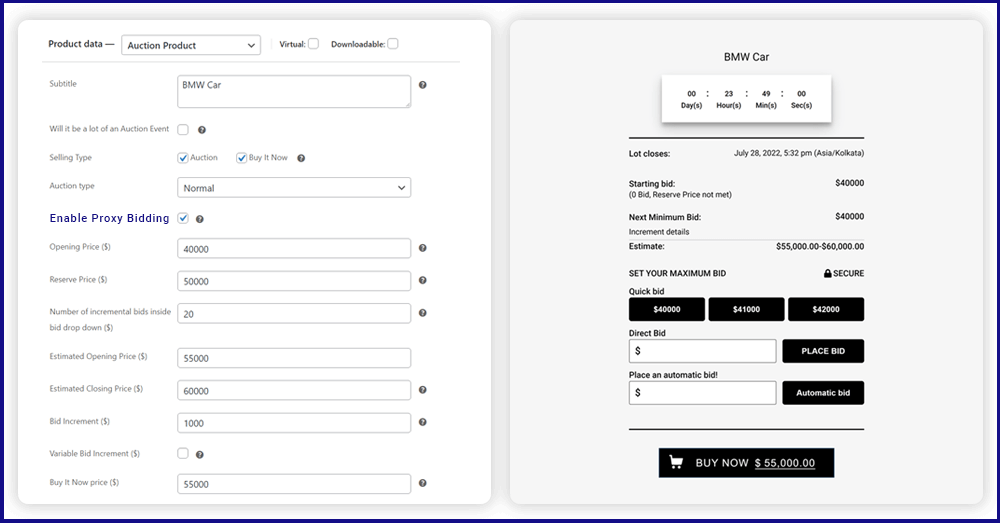
WordPress auction software’s user-friendly interface easily accommodates proxy bidding, guaranteeing a smooth experience for both experienced bidders and newcomers to the auction scene.
User Sets Maximum Bid:
One of the key advantages of proxy bidding is its ability to streamline the bidding process. Users no longer have to manually place bids or constantly monitor their position in an auction. Instead, they can set their maximum bid and let the automated system take care of the rest. This automated process not only saves time but also eliminates the stress and anxiety associated with traditional bidding methods.
Bid Increment Rules:
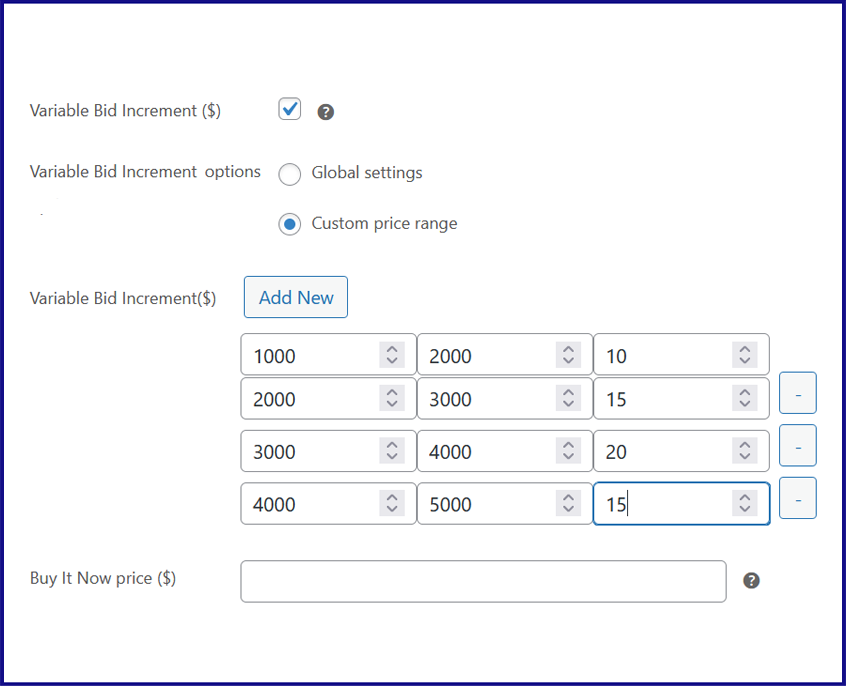
To further enhance user experience, bid increment rules are implemented within ultimate auction software. These rules ensure fair and consistent bidding by determining how much each subsequent bid should increase by. By adhering to these rules, users can rest assured that they are participating in a transparent and equitable auction.
Outbid Notifications:
Outbid notifications are another valuable feature offered by this software. Users receive real-time alerts whenever they are outbid on an item, allowing them to evaluate their options and decide whether to increase their maximum bid or move on to other auctions. This feature ensures that users never miss out on an opportunity while also providing them with complete control over their bidding strategy.
Empowering Organizers:
Proxy bidding combined with WordPress auction software opens up a world of possibilities for auction organizers. The platform’s user-friendly design makes setting up and managing auctions easier, lessening administrative duties’ workload.
The event’s planners can concentrate on selecting intriguing auction items and raising awareness of the occasion because they know that the complex bidding process is in good hands.
Auction Customization:
WordPress auction software is a collaborator in creating exceptional auction experiences, not just a bystander. It enables event planners to alter auction specifications like bidding increments and lengths.
This degree of control works well with proxy bidding, allowing bidders to plan their strategies within an environment that suits their preferences.
Data-Driven Insights:
Informed decision-making is critical to the proxy-bidding and WordPress auction software combination. The software’s robust data analytics provide insights into bidder behavior, popular items, and bidding trends.
With this information, event planners can improve their auction tactics, choose items that appeal to participants, and improve the whole thing.
What Is a Proxy Bid? Boosting User Engagement and Accessibility
The usability of WordPress auction software ensures that participants can participate from their preferred devices in a world where connectivity is crucial. Bidders can quickly enter the auction room using a smartphone, tablet, or desktop computer and take advantage of the power of proxy bidding. This accessibility across platforms encourages a varied and active participant base.
Security and Trust:
WordPress-compatible auction software understands the critical nature of security. SSL encryption, secure payment gateways, and user data protection create an atmosphere of trust. Participants must trust the platform’s security measures for proxy bidding to succeed. This assurance is provided by WordPress auction software, opening the door for easy participation.
Final Thoughts
Proxy bidding and our auction script synergize to unlock opportunities within online auctions, where the skillful dance of bidding encounters the prowess of technological advancement. The broadened horizons of proxy bidding, coupled with the intuitive user interface, seamlessly meld with the functionalities of WordPress auction software.
The audience is invited to transcend conventional boundaries, established bidding norms, and the forefront of technology. Experts in the field endorse the collaborative potential of WordPress auction software and proxy bidding, facilitating the realization of auction greatness—a spectacle of tactical finesse, interactive participation, and the boundless capabilities of cutting-edge technology.
Want to set up an Auction Website
Ultimate Auction Software will let you do it in easy steps with Proxy Bidding.
Frequently Asked Questions
Get your own Auction Today!

Choose Your Plan

Easy Setup

5 Star Support
- What is a Buyer's Premium
- Calculation Methods: Understanding What Is a Buyer's Premium
- What Is a Buyer's Premium? Understanding Its Role and Impact
- What Is a Buyer's Premium? Insights Across Different Industries
- What Is a Buyer's Premium? Key Factors That Influence It
- An Exceptional Auction Marketplace Software: Understanding What Is a Buyer's Premium to Boost Earnings
Let’s start with the Buyer’s Premium definition. What is a Buyer’s Premium? It’s a term commonly used in the auction industry to describe an additional fee or percentage that buyers must pay on top of the final hammer price of an item. Essentially, it’s a surcharge, typically expressed as a percentage of the hammer price, that contributes to the auction process. The buyer’s premium plays a crucial role in auctions, benefiting both buyers and sellers in various ways.
The primary purpose of a buyer’s premium is to generate revenue for the auction house or seller. It helps cover the costs associated with organizing and conducting the auction, such as marketing expenses, administrative fees, and catalog production. Additionally, the buyer’s premium can also act as an incentive for auction houses to secure high-quality consignments and attract potential sellers, as it contributes to the overall profitability of the auction.
Overall, the buyer’s premium has become an integral part of the auction industry, shaping the dynamics of buying and selling at auctions. Its significance continues to evolve as the auction market adapts to changing industry landscapes and economic conditions.
What is a Buyer’s Premium
From Bid to Bill: The Buyer’s Premium Calculation Process
How the buyer’s premium functionality implemented in an Ultimate Auction Software.

The concept of buyer’s premium revolves around the additional fee imposed on the buyer during an auction. When an item is sold at an auction, the final price achieved through bidding is known as the hammer price. The auctioneer can plan to take an extra amount over the hammer price and can set a percentage or a flat fee, forming the total purchase price paid by the buyer.
Calculation Methods: Understanding What Is a Buyer’s Premium
- Percentage-based:
The most common method of calculating the buyer’s premium is through a percentage-based approach. Auction houses determine a specific percentage that will be added to the hammer price. For example, if an item has a buyer’s premium of 10% and the hammer price is $1,000, the buyer will pay an additional $100 (10% of $1,000) as the buyer’s premium. The total purchase price in this case would be $1,100. - Flat fee:
In some cases, auction houses may opt for a flat fee buyer’s premium instead of a percentage-based calculation. With this method, a fixed amount is added to the hammer price regardless of the item’s value. For instance, if the flat fee is $50 and the hammer price is $500, the buyer will pay a total of $550 ($500 + $50) for the item.
The choice between percentage-based and flat fee buyer’s premiums often depends on the auction house’s policies and the nature of the items being auctioned. Percentage-based premiums are more commonly used for high-value items, as they allow for flexibility in accommodating different price ranges. On the other hand, flat fee premiums may be employed for lower-priced items or in situations where a simple and straightforward calculation is preferred.
What Is a Buyer’s Premium? Understanding Its Role and Impact

The buyer’s premium plays a crucial role in the auction industry. The buyer’s premium serves as a vital source of revenue for auction houses or sellers. It incentivizes sellers to consign high-quality items and allows auction houses to sustain their operations while providing a platform for buyers to acquire unique and desirable items.
- Revenue generation:
One of the primary benefits of the buyer’s premium is its role in revenue generation for auction houses or sellers. The additional fee collected from buyers significantly contributes to the overall income generated from the auction. This revenue helps cover the costs of organizing and conducting the auction, such as marketing expenses, venue rentals, catalog production, and staff salaries. It also allows auction houses to invest in expanding their services and improving the auction experience for both buyers and sellers. - Incentive for quality consignments:
The buyer’s premium can act as an incentive for sellers to consign high-quality items to an auction. Auction houses often take this amount themselves or also offer it as a commission to the consignor. This encourages sellers to promote and achieve a higher hammer price which in turn will bring more commission to them. Consequently, the buyer’s premium encourages sellers to consign valuable and desirable items, as it aligns their interests with those of the auction house. This creates a win-win situation where sellers are motivated to offer exceptional pieces, and auction houses have a higher chance of attracting buyers and achieving successful sales.
What Is a Buyer’s Premium? Insights Across Different Industries

- Art auctions
Art auctions are known for incorporating buyer’s premiums as a common practice. These premiums play a significant role in the art market and contribute to the financial dynamics of buying and selling artwork. Art auction houses typically employ percentage-based buyer’s premiums, which can range from 10% to 25% of the hammer price. The buyer’s premium in art auctions not only generates revenue for auction houses but also supports the promotion of art, funding exhibitions, and expanding collections. However, the higher buyer’s premiums in the art market have also been subject to debate, as some argue that they can deter buyers or artificially inflate prices. - Real estate auctions
Buyer’s premiums have also found their way into the realm of real estate auctions. In these auctions, the buyer’s premium is typically a percentage of the final sale price and is added to the total amount paid by the buyer. Real estate auction houses utilize buyer’s premiums to cover the costs associated with organizing auctions, such as advertising, property inspections, and administrative expenses. The buyer’s premium in real estate auctions varies depending on the auction house and the specific property being auctioned. It is important for potential buyers to carefully review the auction terms and conditions to understand the applicable buyer’s premium and consider it in their budget calculations. - Online marketplaces
With the rise of online marketplaces, the inclusion of buyer’s premiums has become more prevalent. Online auction platforms often incorporate buyer’s premiums as a means to generate revenue and support their operations. In online marketplaces, the buyer’s premium is either a percentage or flat fee, disclosed before bidding. It supports the platform’s business model and enhances functionality and user experience
Buyer’s premium supports revenue and growth across various industries
What Is a Buyer’s Premium? Key Factors That Influence It

- Auction house policies and practices
The buyer’s premium can vary based on the policies and practices established by different auction houses. Auction houses have the flexibility to set their own buyer’s premium rates, whether it is a percentage-based fee or a flat fee. Factors such as the size and reputation of the auction house, the scope of services provided, and the target market they cater to can influence the buyer’s premium. Some auction houses may choose to set higher premiums to cover their operating costs or to position themselves as premium service providers, while others may opt for lower premiums to attract a broader range of buyers. - Competition and market dynamics
Competition among auction houses and market dynamics can also impact the buyer’s premium. In highly competitive auction markets, where multiple auction houses are vying for consignments and buyers, there may be downward pressure on buyer’s premiums as auction houses strive to attract and retain clients. Conversely, in specialized markets with limited competition or high demand for specific items, buyer’s premiums may be higher due to increased bargaining power or scarcity of alternatives for buyers. - Value and rarity of the item being auctioned
The value and rarity of the item being auctioned often play a role in determining the buyer’s premium. For high-value or unique items, auction houses may be inclined to set higher premiums to capture a greater share of the final sale price. This is because the buyer’s premium is a percentage-based fee, meaning a higher hammer price results in a larger buyer’s premium. Additionally, rare or sought-after items may attract more competitive bidding, giving auction houses the opportunity to justify and command higher buyer’s premiums.
Special Offer – Limited Time Only!
Rev Up Your Savings: Get 10% off Essential Ultimate Auction Software!
Fill the form and receive directly to your mailbox a discount code.
"*" indicates required fields
An Exceptional Auction Marketplace Software: Understanding What Is a Buyer’s Premium to Boost Earnings
With the growing prominence of online auctions and the inclusion of buyer’s premiums, there is a need for comprehensive auction marketplace software that addresses the specific requirements of both buyers and sellers. Ultimate Auction Pro Software bridges this gap, offering a range of unique features tailored to optimize the buyer’s premium experience.
- Seamless Payment Integration
Ultimate Auction Software facilitates smooth payment processing, integrating secure payment gateways to ensure swift and hassle-free transactions for buyers. By automating the calculation and collection of buyer’s premiums, the software eliminates the need for manual calculations and reduces the chances of errors or discrepancies. - Transparent Fee Disclosure
A key aspect of buyer’s premiums is transparency. Ultimate Auction Software emphasizes clear and upfront fee disclosure, providing buyers with a breakdown of the buyer’s premium percentage or flat fee at the point of bidding. This fosters trust and enables buyers to make informed decisions based on the total purchase price. - Personalized Budget Management
Ultimate Auction Software features personalized budget management tools, allowing buyers to set their maximum bid amounts while factoring in the buyer’s premium. This empowers buyers to bid confidently within their budget constraints, preventing any unwelcome surprises when the final invoice is issued. - Auction Notification and Tracking
Keeping buyers informed is crucial to a successful auction experience. Ultimate Auction Software incorporates real-time auction notifications, alerting buyers to bid updates, outbidding scenarios, and auction closure. Additionally, it provides tracking features to monitor bidding activity, allowing buyers to stay engaged and make informed decisions until the auction’s conclusion. - Mobile Accessibility
In today’s mobile-centric world, Ultimate Auction Software prioritizes accessibility by offering a mobile-friendly interface. Buyers can conveniently participate in auctions, track their bids, and manage their buyer’s premium calculations on the go, enhancing convenience and flexibility.
General overview of how the buyer’s premium functionality implemented in an Ultimate Auction Software:
Configuration :
The Ultimate Auction Software reach theme options include an option to set the buyer’s premium rate or amount. This allows the site owner to define the additional fee or percentage that buyers will be charged on top of the winning bid. The Ultimate Auction Software also include Buyer’s premium on a product-specific basis can offer more flexibility in determining the additional fee or percentage for each item.

From Bid to Bill: The Buyer’s Premium Calculation Process
How the buyer’s premium functionality implemented in an Ultimate Auction Software.
Art auctions
The auction listing pages would typically show the current bid amount, but the Ultimate Auction Software also display the buyer’s premium separately or indicate that it will be added to the final sale price. This transparency ensures that bidders are aware of the total cost they will pay if they win the auction.

Auto Debit :
Auto debiting the buyer’s premium amount when an auction product expires is a specific feature that available in the Ultimate Auction Software.
Calculation:
When a bidder wins an auction, the buyer’s premium is automatically calculated and added to the final sale price to determine the total amount the buyer needs to pay. The theme would handle this calculation based on the configured buyer’s premium rate or amount.

Invoicing:
The theme generate an invoice or payment summary for the winning bidder, clearly indicating the breakdown of costs, including the buyer’s premium. This helps provide a transparent record of the transaction for both the buyer and the seller.
In conclusion, Ultimate Auction Software stands out as an essential auction marketplace software specifically designed to optimize the buyer’s premium experience. By streamlining the buyer’s premium process, Ultimate Auction Software revolutionizes the auction marketplace, ensuring a smooth and efficient experience for all parties involved. Visit Ultimate Auction Software to discover how it can enhance your auction journey.
Frequently Asked Questions
A buyer’s premium is an additional fee or percentage charged to buyers on top of the hammer price in an auction. It is collected by the auction house or seller and helps cover the costs associated with conducting the auction. The buyer’s premium is usually disclosed before bidding and is added to the final purchase price, which the buyer is required to pay
The purpose of a buyer’s premium is twofold. Firstly, it generates revenue for auction houses or sellers, helping to offset the costs of organizing and running the auction. Secondly, it incentivizes sellers to consign high-quality items by offering them a portion of the buyer’s premium as a commission, thereby compelling their audiences and end customers to submit valuable items to the auction.
The two main types of buyer’s premiums are percentage-based and flat fee. Percentage-based buyer’s premiums are calculated as a percentage of the hammer price, while flat fee buyer’s premiums are a fixed amount added to the purchase price. The specific type of buyer’s premium employed can vary depending on the auction house, industry, and the value of the items being auctioned.
Pros of buyer’s premiums include providing revenue for auction houses, incentivizing high-quality consignments, and helping cover auction costs. However, some cons include the additional cost for buyers, the potential impact on bidding behavior, and the perception of artificially inflated prices.
Buyer’s premiums are typically non-refundable. Once the buyer participates in an auction and successfully wins an item, they are obligated to pay the hammer price and the buyer’s premium. It is crucial for buyers to carefully review the auction terms and conditions to understand the refund policies specific to each auction house.
The cost of a buyer’s premium can vary depending on several factors, such as the auction house, industry, and the value of the items being auctioned. Percentage-based buyer’s premiums commonly range from 10% to 25% of the hammer price, while flat fee premiums can range from a few dollars to a few hundred dollars.
Buyer’s premiums are typically disclosed in the auction catalog or listed on the auction house’s website. It is important to thoroughly review the terms and conditions provided by the auction house to find the specific buyer’s premium applicable to the auction you are interested in.
Avoiding buyer’s premiums may be challenging, as they are standard practice in auctions. However, one possible way to mitigate the impact is to explore alternative purchasing channels outside of auctions, such as private sales or direct negotiations with sellers. However, it’s important to note that these options may come with their own set of considerations and negotiation dynamics.
Frequently Asked Questions
Get your own Auction Today!
Choose Your Plan
Easy Setup
5 Star Support
Welcome to the exciting world of silent auctions! If you’re wondering what is a silent auction, it’s a fundraising event or sales format where bids are placed privately rather than openly. Whether you’re a nonprofit organization raising funds for a charitable cause or an entrepreneur looking to create a unique online marketplace, hosting a silent auction website can be a rewarding venture.In this comprehensive guide, we’ll walk you through the essential steps and considerations to ensure your auction website is a resounding success.
What is a Silent Auction and How does it work?
A silent auction is a fundraising event where items are displayed with bid sheets and bidders submit bids privately instead of calling them out loud. The highest bidder wins each item. Nonprofits use them because they’re less intimidating than live auctions and raise serious money.
How Silent Auctions Work
The in-person format is simple. Items sit on tables with a bid sheet next to each one. The sheet shows the item, its starting bid, and blank lines where bidders write their name and bid amount. Participants walk around, look at items, and write down bids. When the auction closes at a set time, whoever has the highest bid on each sheet wins that item.
Online silent auctions work the same way on a website or app. Bidders log in, browse items, and enter their maximum bid.
Why They Work for Nonprofits
Silent auctions raise money effectively because people bid on items they actually want, and there’s no pressure to bid fast.
They’re also flexible. You can run a silent auction alongside a live auction at a gala, or as a standalone event. Some nonprofits run them for 24+ hours online to reach bidders across a wider area.

Throughout the auction, participants keep a close eye on their desired items, monitoring the bids. The auctioneer or event organizer announces the closing time, giving participants a final opportunity to submit their highest bids.
It is possible to host silent auctions completely over the internet with the help of silent auction software. Rather than checking out an item in a venue, participants can check out auction items online and outbid one another from their desktop, laptop, or mobile. Silent auctions provide a thrilling and engaging experience, combining the excitement of competition with the satisfaction of supporting a worthy cause.
Why Run a Silent Auction?
Silent auctions raise money effectively. Here’s what makes them work.
People bid more freely. Live auctions can feel high-pressure. Silent auctions let people bid at their own pace without feeling rushed or judged. That lower barrier to entry means more bids overall.
You reach more people. Online silent auctions aren’t limited to people in the room.
Donors get recognition and community. When someone wins an item, they’re publicly supporting your cause (if you announce winners). That visibility matters. They also get to network with other people who care about the same cause.
It’s flexible with other events. You can run a silent auction before, during, or after a gala, dinner, or fundraiser. It keeps people engaged while you’re doing other activities.
Lower overhead than live auctions. You don’t need a professional auctioneer or a vocal ringmaster. A volunteer can manage it.
Tips for Running a Successful Silent Auction
Curate items your audience actually wants. Don’t just accept every donation. Ask yourself: would people at this event bid on this? Local experiences (dinner certificates, spa packages) and art sell better than random donated goods.
Set opening bids low enough to encourage participation. If you start too high, fewer people will bid. A lower opening bid gets the momentum going. You’ll still reach a good final price if the item is desirable.
Display items attractively and describe them well. Whether in-person or online, good photos and clear descriptions matter. Tell people what they’re getting. Include any relevant details (size, condition, expiration date for experiences).
Use a countdown or closing time to create urgency. People bid more actively when they know bidding ends soon. Announce the closing time clearly so no one misses it.
Promote the event ahead of time. Let people know what items will be available. Build anticipation.
Follow up with winners promptly. Send congratulations, collect payment, and help them claim their items quickly. Fast follow-up builds goodwill and makes the process smooth.
Types of Silent Auctions
Silent auctions aren’t one-size-fits-all. Depending on the event, budget, and audience, organizers typically choose from one of these formats:
1. Traditional Paper Bid Sheet Auctions
This is the classic format most people picture. Each item is displayed on a table with a printed bid sheet next to it. Guests write their name and bid amount directly on the sheet, and anyone can walk by and outbid the current highest number. It’s simple and doesn’t require any technology, but it can get messy with illegible handwriting, crowded tables, and long lines near closing time.
2. Mobile or Text-to-Bid Auctions
Instead of paper, guests bid using their smartphones, usually by texting a code or using an event app. Bidders get instant notifications when they’re outbid, which keeps engagement high throughout the event. This format cuts down on crowding around bid sheets and speeds up checkout since payment info can be tied to the bidder’s profile.
3. Online or Virtual Silent Auctions
The entire auction happens on a website or platform, with no physical event required. Bidders can browse items and place bids from anywhere, often over several days instead of just a few hours. This format is ideal for reaching supporters who can’t attend in person and works well for both standalone fundraisers and as an add-on to a live event.
4. Hybrid Auctions (In-Person + Online Bidding)
This combines a physical event with online bidding, letting guests bid in the room while remote supporters bid from home. It’s become increasingly popular because it widens the pool of bidders and boosts overall revenue without sacrificing the in-person experience.

Silent Auction vs. Live Auction vs. Online Auction
Silent auctions, live auctions, and online auctions all raise money, but they work differently and suit different situations.
Silent Auction
Bidders write their bids on paper (in-person) or submit them online without knowing what others bid. The highest bidder at closing time wins. No auctioneer needed.
Best for: Nonprofits that want a low-pressure event. Good when you have 50-200 items and want people to bid at their own pace. Works well paired with a gala or dinner.
Live Auction
An auctioneer calls out items and prices. Bidders raise their hands or paddle to bid. Prices climb in real time. Fast-paced and energetic.
Best for: High-value items. A live auctioneer creates excitement and encourages competitive bidding. You’ll get higher final prices on premium items. Downside: requires a professional auctioneer and can feel intimidating to casual bidders.
Online Auction
Bidders log into a website or app and submit bids from anywhere. Can be real-time (live bidding online) or timed (like a silent auction, but digital). Runs 24+ hours typically.
Best for: Reaching bidders beyond your local area. No venue needed. Lower overhead. You can reach people across the country or world. Downside: requires a platform and more technical setup.
How to Choose
Run a silent auction if you want a community event with lower pressure and easy logistics.
Run a live auction if you have premium items and want to maximize prices through competitive bidding.
Run an online auction if you want to reach beyond your local area and don’t need the energy of a live event.
Many nonprofits run both at the same event. A live auction for the big-ticket items, a silent auction running alongside it for everything else. This gives you the best of both worlds.
Common Mistakes to Avoid
Don’t start bidding too high. If your opening bid is $50 but the item is worth $30, nobody bids. Start low. You’ll still reach a good final price if people want the item.
Don’t accept items nobody wants. Generic donated goods sit unsold. Curate ruthlessly. Ask: would people at our event actually bid on this?
Don’t announce closing time unclearly. If people don’t know when bidding ends, you’ll get confused last-minute bids and disputes. Be explicit: “All bids must be submitted by 6 PM sharp.”
Ready to Host Your Silent Auction?
You now know what silent auctions are, how they work, why nonprofits use them, and how to run one successfully. The next step depends on your format.
For an in-person event: Book a venue that can accommodate item displays. Reach out to local businesses and donors for item contributions. Plan for at least 50-100 items to keep people engaged. Set a clear closing time and assign someone to announce it.
For an online event: Choose a platform that handles bidding and payments. Promote the event to your email list and social media. Consider offering a 24-48 hour bidding window to maximize participation.
Either way: Start planning now. Silent auctions work best when you curate items people actually want, set reasonable opening bids, and promote the event ahead of time. Follow up quickly with winners to keep the momentum going and build goodwill for your next event.
The beauty of silent auctions is their flexibility. You can run them in person, online, or both simultaneously. They raise real money for causes people care about, and they do it without high pressure or complicated logistics.
Your supporters want to help. A well-run silent auction gives them an easy, enjoyable way to do it.
Get your own Auction Today!
Choose Your Plan
Easy Setup
5 Star Support